Last updated: July 2026
Shed roof felt replacement is one of the few roofing jobs a confident homeowner can genuinely take on, and also one of the few where knowing when to step back saves real money. A tired felt roof on a garden shed leaks, sags and quietly rots the timber underneath if it is left too long, so the question most people in Dublin end up asking is a simple one. Is this a Saturday job with a roll of felt and a box of clout nails, or is it time to phone a roofer?
Signs Your Shed Roof Felt Needs Replacing
Shed roof felt has a hard life. It sits flat or on a shallow pitch, it takes the full weight of Irish rain and wind, and it rarely gets a second glance until water is dripping onto the lawnmower. Most garden shed felt lasts somewhere between eight and fifteen years depending on the quality that went down and how exposed the shed is, so on a lot of Dublin gardens the original builder's felt is well past its best.
The good news is that failing felt tells you clearly what is happening. You just have to know what to look for, and the earlier you catch it the smaller the job stays.
- Tears, splits or cracks in the felt, usually along the ridge or where it folds over an edge, letting water straight in.
- Bubbling or blistering across the surface, a sign that water or air has got trapped underneath and the bond has failed.
- Loose or lifting edges where the wind has worked the felt free of the fascia or drip batten.
- Water stains, drips or a musty smell inside the shed after rain, the clearest evidence the felt is no longer keeping the weather out.
- Sagging or spongy patches when you press on the roof from outside, which points to the timber deck below already soaking up water.
- Green algae, moss or a granule-shedding, worn-through surface where the felt has simply run out of life.
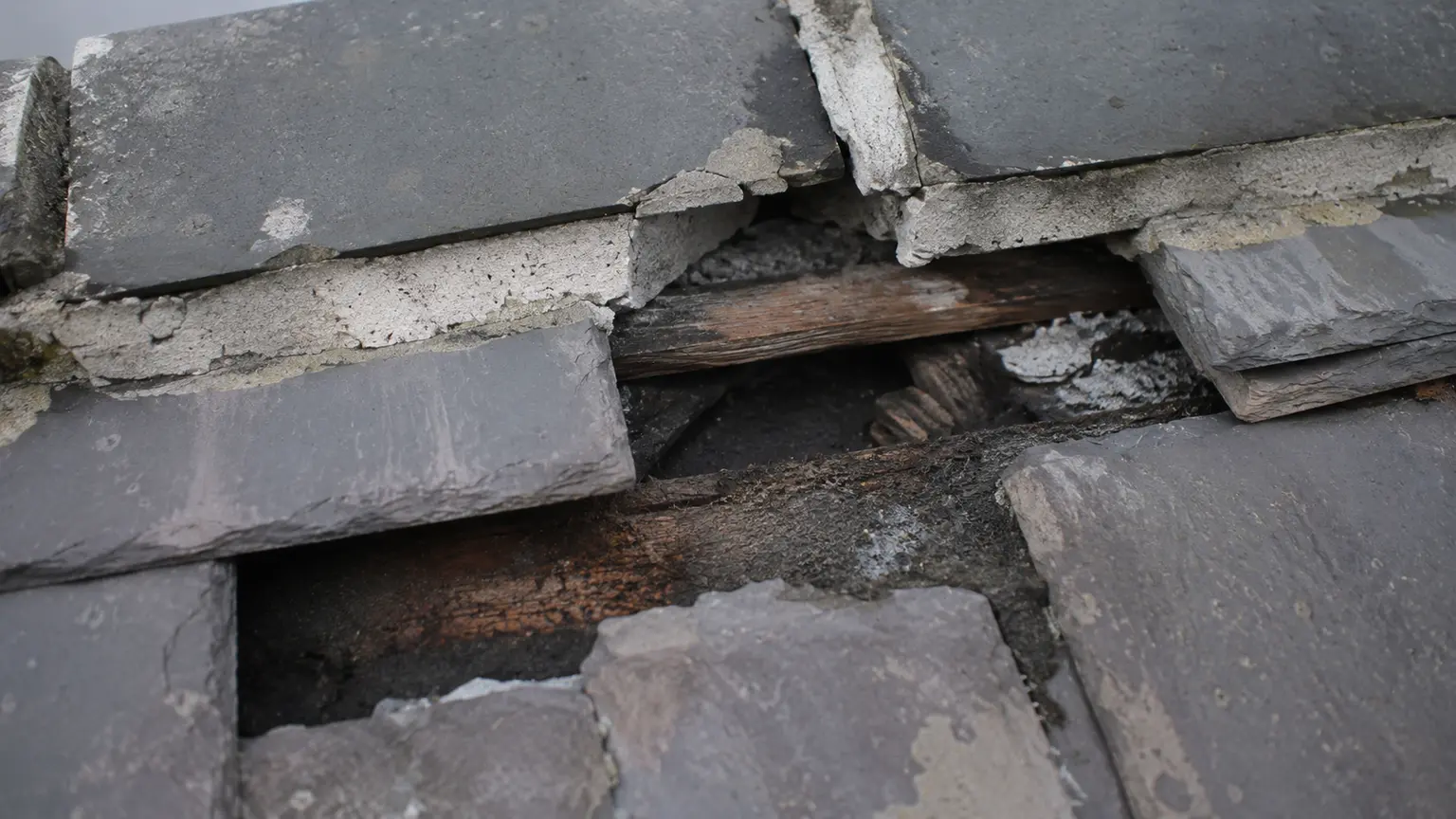
If you catch it at the tear-and-lift stage, re-felting is straightforward. If the deck already feels soft underfoot, you are into timber work as well, and that changes the whole job. If water is getting into the shed and you are not sure how far it has spread, the same first-response thinking applies to any roof, and our guide on what to do when a roof is leaking walks through containing the damage before you start.
Shed Roof Felt Types and Roofing Materials in Ireland
Shed roofing materials in Ireland come down to a few clear choices, and the roll of felt you buy makes a real difference to how long the repair lasts. Cheap thin felt from a discount roll is exactly what most sheds arrive with, and it is exactly why they leak again in a few years. Spending a little more here is the single best value decision in the whole job.
The felt options you will find in a builder's merchant
- Standard mineral shed felt, the green, grey or black granule-topped roll sold in every hardware shop. It is cheap and easy to fit with nails, and it is fine for a low-value shed you do not mind re-doing in a decade.
- Polyester-reinforced felt, a heavier, tougher roll with a woven backing that resists tearing far better than the basic stuff. This is the sensible upgrade for a shed you actually care about.
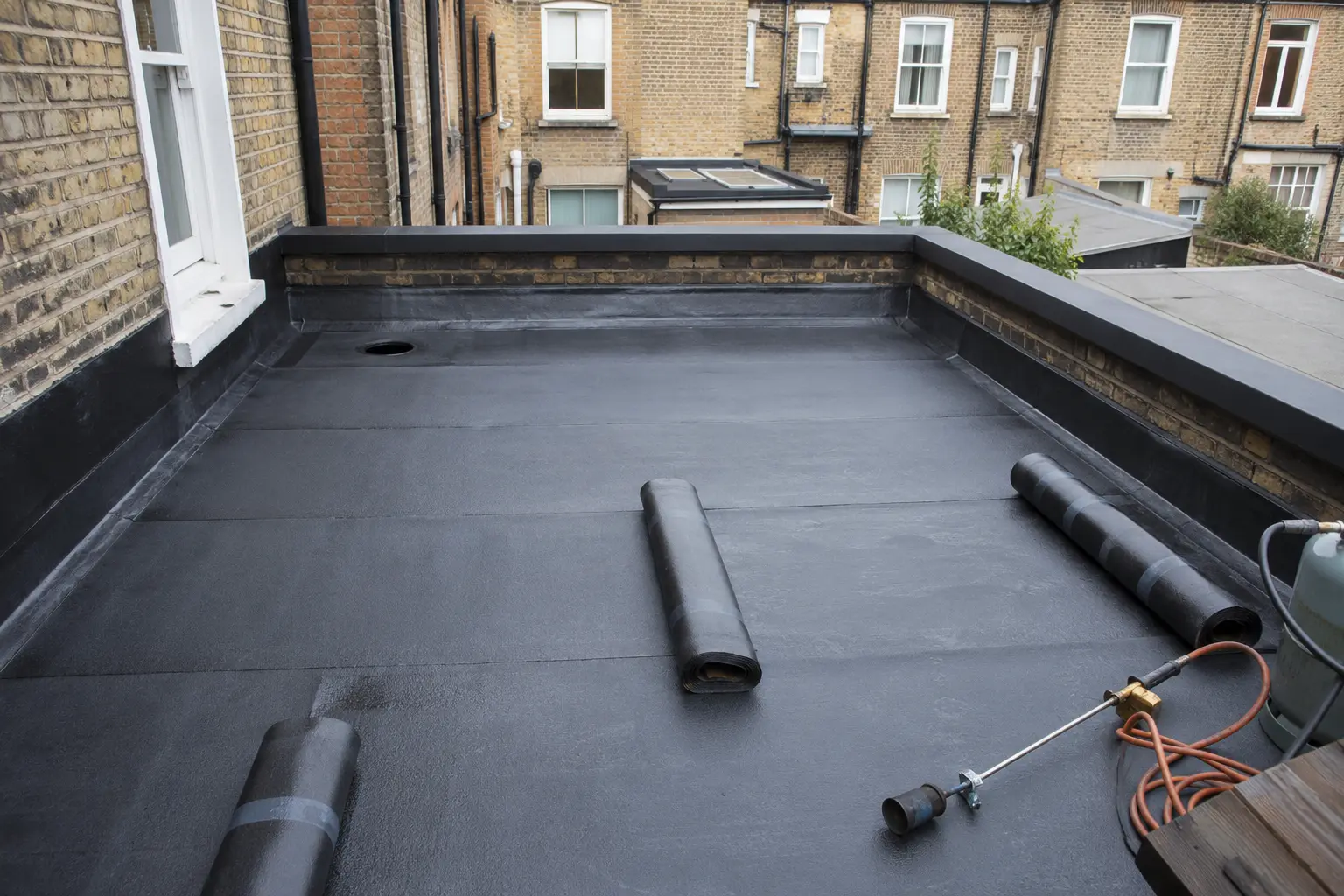
- Torch-on felt, a bitumen membrane bonded down with a gas torch so the layers fuse into one continuous skin. It is the most durable felt finish, but it needs the right kit and real care with an open flame near timber.
- Self-adhesive felt, a peel-and-stick membrane that gives you a bonded finish without a torch. It costs more than nailed felt but removes the fire risk, which makes it a good middle ground for a careful DIYer.
For fixings, shed felt is either nailed or bonded. Galvanised clout nails, the short fat nails with a wide flat head, are the traditional way to hold felt to a timber deck and they are all most sheds ever need. Torch-on and self-adhesive systems bond the felt instead, which gives a cleaner, more watertight result with no nail holes across the field of the roof. A tub of felt adhesive is still worth having to seal laps and edges whichever route you take.
Felt vs EPDM for a Shed Roof
Felt is not the only option any more. EPDM rubber, the single-ply membrane used on plenty of house flat roofs, is now sold in shed-sized sheets and it changes the calculation. Where felt is layered and lapped, EPDM goes down as one continuous sheet of rubber with no seams across the roof, which is exactly where felt tends to fail first.
Felt is cheaper up front and faster to learn, but it has a shorter life and more weak points at the laps. EPDM costs more per square metre and asks for a clean, sound deck, but a well-laid rubber roof can outlast three felt roofs and shrugs off UV and frost. On a shed you want to forget about, EPDM is often the better long-term value. On a quick, low-cost fix, felt still wins.
For a small, simple shed roof with square corners, EPDM is well within reach of a competent DIYer, because the single sheet does most of the waterproofing work for you. Where it gets fiddly is around awkward shapes, pipes and upstands, which is the same place felt gets fiddly too. Whichever material you choose, the deck underneath has to be dry, flat and solid first.
How to Replace Shed Roof Felt Yourself, Step by Step
Re-felting a small, sound shed roof is a genuine weekend job for a practical person. Pick a dry, still day, because felt is miserable to lay in wind and it will not bond to a wet deck. Work methodically and do not rush the edges, since that is where nearly every leak begins.
- Clear the roof and inspect the deck. Take everything off the roof and out of the shed so you can see daylight through any gaps. Sweep the surface clean and get a clear picture of what you are working with before you commit.
- Strip the old felt and pull every nail. Peel off the old felt, prise out the fascia and drip battens, and remove every last clout nail. A flat bar and a claw hammer make short work of it. Leaving old nails proud will punch straight through your new felt.
- Repair or replace the timber deck. Press across the whole deck for soft or spongy spots. Cut out and replace any rotten boards with exterior-grade ply or OSB, and drive down or replace any loose fixings so the surface is flat, dry and solid.
- Cut the felt to length and let it relax. Measure each run with enough overhang to fold down the eaves and gable, then cut your pieces and lay them out flat for half an hour. Felt off a cold roll holds its curl, and letting it relax makes it far easier to lay flat.
- Fix the first course at the eaves. Start at the lower edge so every lap above sheds water over the one below, like tiles. Position the first length, fold it over the eaves batten and nail or bond it down, keeping it straight and taut as you go.
- Work up the roof, lapping each course. Lay each higher course to overlap the one below by at least 75mm, sealing the lap with felt adhesive so no water can track back under it. On a ridged roof, run the final piece over the apex so it caps both slopes.
- Nail off with galvanised clout nails. Fix along the laps and edges at roughly 50mm centres with galvanised clout nails, keeping the field of the roof nail-free where the felt is bonded. Every nail head in open felt is a future leak, so keep them to the lapped edges.
- Finish the edges, battens and drips. Fold the felt neatly over the gables and eaves, refit the fascia and drip battens over it, and seal the corners with adhesive. Tidy, well-sealed edges are what make a re-felt last, so give them the most care of the whole job.
Torch-on felt gives a superb finish, but an open flame inches from dry timber and stored petrol, paint or gas is a serious fire risk. If you have never used a roofing torch, choose a nailed or self-adhesive felt for a shed, or hand the torch-on work to someone who does it every week. It is not worth a shed fire.
Tools and Shed Roofing Materials You Will Need
You do not need a van full of gear to re-felt a shed. Most of it is standard toolbox kit, and the few felt-specific bits are cheap. Getting the materials right before you start saves the mid-job trip to the merchant that always seems to fall on a Sunday.
- New felt or EPDM sized to the roof with an allowance for overhangs and laps, plus a spare metre for mistakes.
- Galvanised clout nails for a nailed felt, or the matching adhesive for a bonded or self-adhesive system.
- A tub of cold felt adhesive or bitumen primer for sealing laps, edges and corners.
- A sharp trimming knife with spare blades, a steel tape, a chalk line and a straight edge for clean cuts.
- A claw hammer and a flat bar for stripping the old felt and nails, and a stiff brush for cleaning the deck.
- Exterior-grade ply or OSB and a few decking screws in case the deck needs a patch.
- A stable ladder or platform, gloves and eye protection, because even a low shed roof deserves a safe set-up.
When Shed Roof Felt Replacement Is a Job for a Roofer
Plenty of shed roofs are a fair DIY project. Others quietly turn into something bigger, and the skill is spotting which is which before you are halfway through with the old felt already off and rain forecast. There is no shame in handing it over, and on the jobs below it is usually the cheaper choice once you count a wasted weekend and a second attempt.
- The timber deck is rotten or sagging, so the job is really a rebuild with new joists and boards, not a re-felt.
- The roof is large, steep or awkwardly shaped, where working safely and laying clean laps is harder than it looks from the ground.
- It is a garage or workshop rather than a light garden shed, since these carry more value, more complex roofs and often a proper flat-roof build-up.
- There is standing water, a persistent leak you cannot trace, or a roof that has been patched several times already.
- You want a warranty on the work, or the shed roof ties into the house, guttering or a boundary wall where a mistake spreads.
- The height or access genuinely worries you, because no shed roof is worth a fall.
A garage or a larger outbuilding often has the same build-up as a house flat roof, so the right fix is a proper membrane system rather than a hardware-shop roll. That is squarely the territory of our flat roof repairs service, where the deck, the falls and the detailing all get done to last. As a family-run Dublin roofer since 1989, we are happy to look at a shed or garage roof and give you a free, honest quote, whether the answer is a full re-felt or just a repair.
How a Shed Roof Differs From a House Flat Roof
It is tempting to treat a shed roof and a house flat roof as the same job at different sizes, but they are built to different standards for good reason. A garden shed roof is a thin timber deck with a single layer of felt and very little underneath it. A house flat roof carries insulation, a vapour control layer, a proper fall to shed water, and a robust membrane, because a failure there means water in your living space, not on a bag of compost.
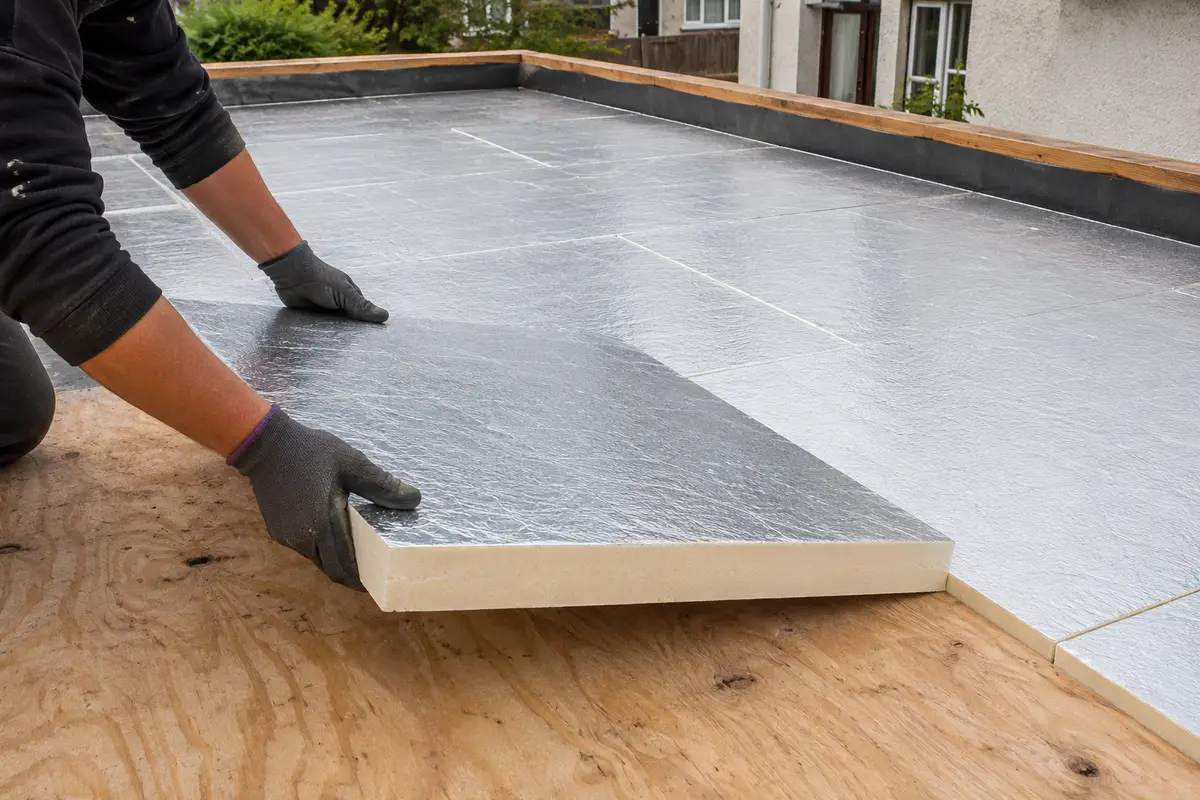
This is why the same roll of shed felt that suits a garden store is the wrong choice on a house extension or a flat-roof garage tied to the dwelling. Those roofs need the falls set correctly so water runs off, the insulation kept dry, and the membrane detailed into upstands, outlets and abutments. A shed forgives a rough job for years. A house flat roof does not, and getting the build-up right first time is exactly what a professional roofer is for.
What Shed Roof Felt Replacement Costs Depend On
Shed roof felt replacement costs less than almost any other roofing job, but the final figure still swings a good deal depending on the shed and the material you choose. As a very general guide across the Irish market, a simple DIY re-felt of a small garden shed is often just the price of a roll of felt, a box of nails and a tub of adhesive, while a roofer re-felting a larger shed or garage sits higher once labour, access and deck repairs come in. Those are broad market estimates only, not a quote for your roof.
- The size and pitch of the roof, since more square metres and steeper slopes mean more material and more time.
- The material chosen, with basic felt cheapest, reinforced or torch-on felt higher, and EPDM rubber dearer again but longer lasting.
- The state of the timber deck, because replacing rotten boards adds both material and labour before any felt goes down.
- Access and height, as a shed jammed against a wall or fence is slower and more awkward to work on.
- Whether it is a light garden shed or a valuable garage, which sets how robust a build-up the roof really needs.
The honest bottom line on shed roof felt replacement is that a small, sound shed is a fair DIY job, while a rotten, large or valuable roof pays to be done properly the first time. If you would rather have a professional look before you buy a single roll, our fully insured Dublin team, rated 5.0 from 41 Google reviews, will give you a free quote and a straight answer on whether to fix, re-felt or rebuild.