Last updated: July 2026
A roof leaking into your home is unsettling, and knowing what to do in the first few minutes makes a real difference to how much damage it causes. The good news is that most leaks are smaller than the stain on the ceiling suggests, and calm, sensible action from the ground protects your home until a roofer can get up and put the source right. This is what to do the moment you spot water coming in, how to find where it is likely getting in, and how to tell an ordinary drip from a genuine emergency.
What To Do the Moment Your Roof Starts Leaking
The first job is to limit the damage indoors, not to fix the roof. Water that is already inside will keep spreading through plaster, carpet and electrics until it is contained, so deal with what is in front of you before you think about the roof itself. Work through these steps in order.
- Contain the water. Put a bucket, basin or deep pot under the drip, and lay old towels around it to stop splashing. If the drip is fast, a bucket with a towel inside it cuts the noise and the splashback.
- Move what matters. Shift furniture, rugs, electronics and anything with sentimental value out from under the leak, and lift curtains and bedding clear. A few minutes here saves the most expensive damage.
- Deal with a bulging ceiling. If a patch of ceiling is sagging or bulging, it is holding a pool of water. Keep everyone from underneath it, put a bucket down, and pierce the centre of the bulge with a screwdriver to let the water drain in a controlled way. A ceiling that bursts on its own makes a far bigger mess.
- Cut the risk from electrics. If water is anywhere near a light fitting, a ceiling rose or a socket, do not touch the switch. Turn off the power to that part of the house at the fuse board and leave those lights and sockets alone until they are dry and checked.
- Find the source indoors. Head to the attic with a torch if it is safe to reach, and look for where the water is tracking. Knowing roughly where it comes in tells a roofer far more than a photo of the stain below.
- Take photos and note the weather. Snap the ceiling, the attic and anything you can see, and note whether it started in wind, in driving rain or only after it had been raining a while. All of that helps pin down the cause.
Everything on this list is done from inside the house or with both feet on the ground. Do not climb onto a wet or windy roof to find the leak. That is the one thing to leave to a roofer with the right access and footing.
Why Roofs Leak, and Where the Water Usually Comes In
A leak almost never starts where the stain appears. Water gets in at a weak point, runs along a rafter or a felt lap, and drips down some distance away, so the wet patch on the ceiling can be a metre or more from the real entry point. On Dublin's older housing stock the same handful of causes come up again and again.
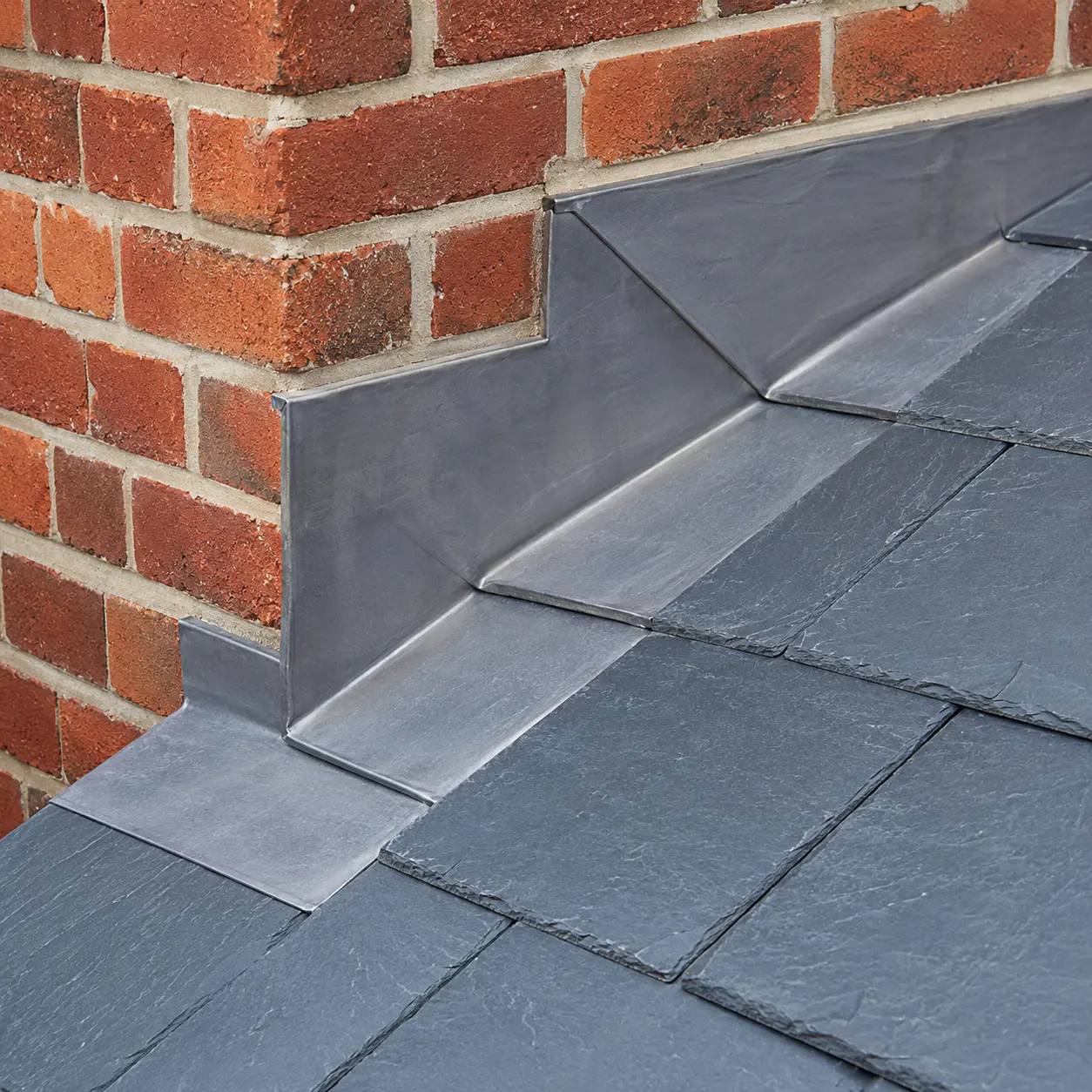
- Failed flashing. The lead that seals where the roof meets a chimney, a wall or a valley is the single most common leak point. When the pointing cracks or the lead lifts, rain tracks straight down inside.
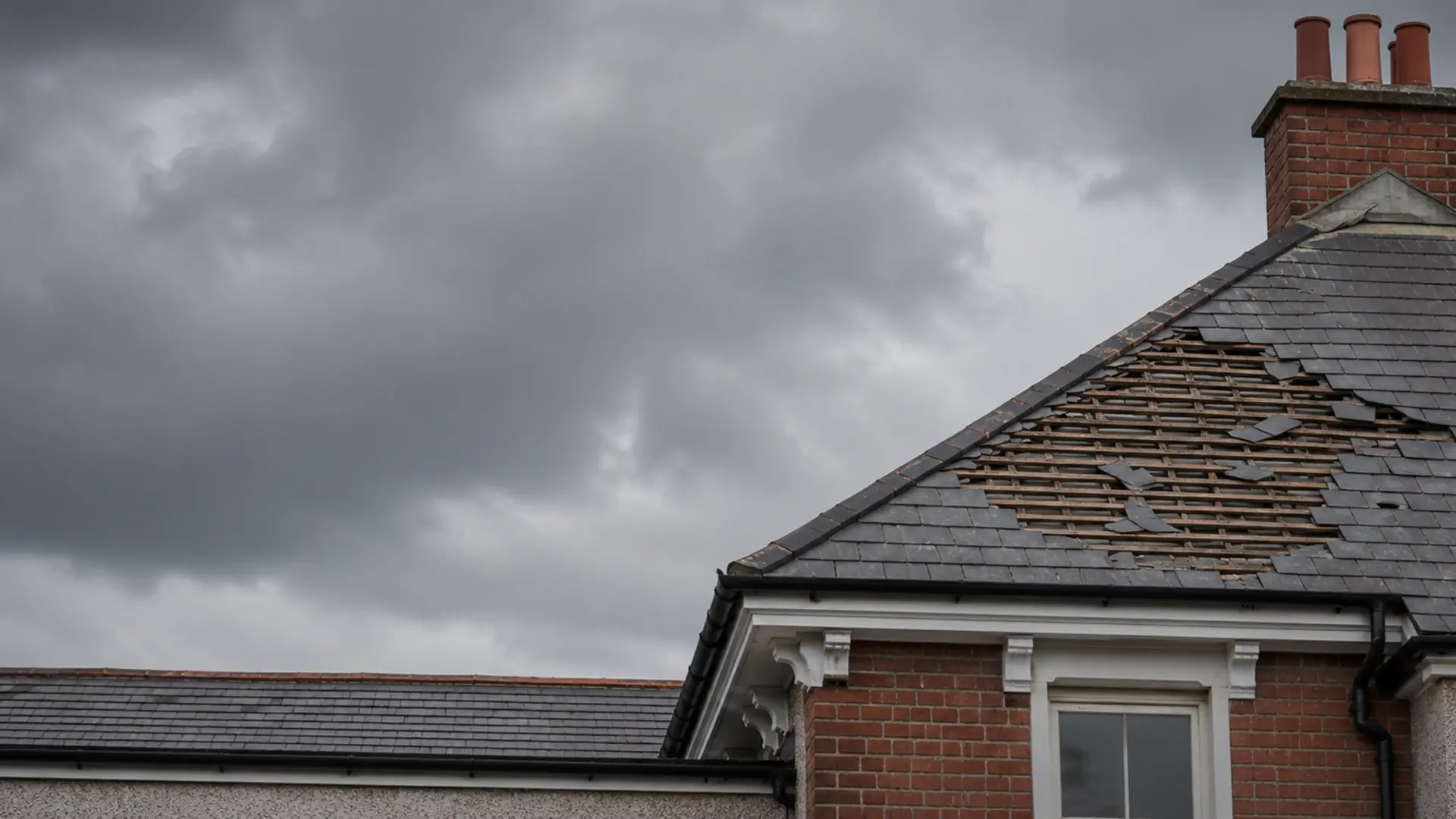
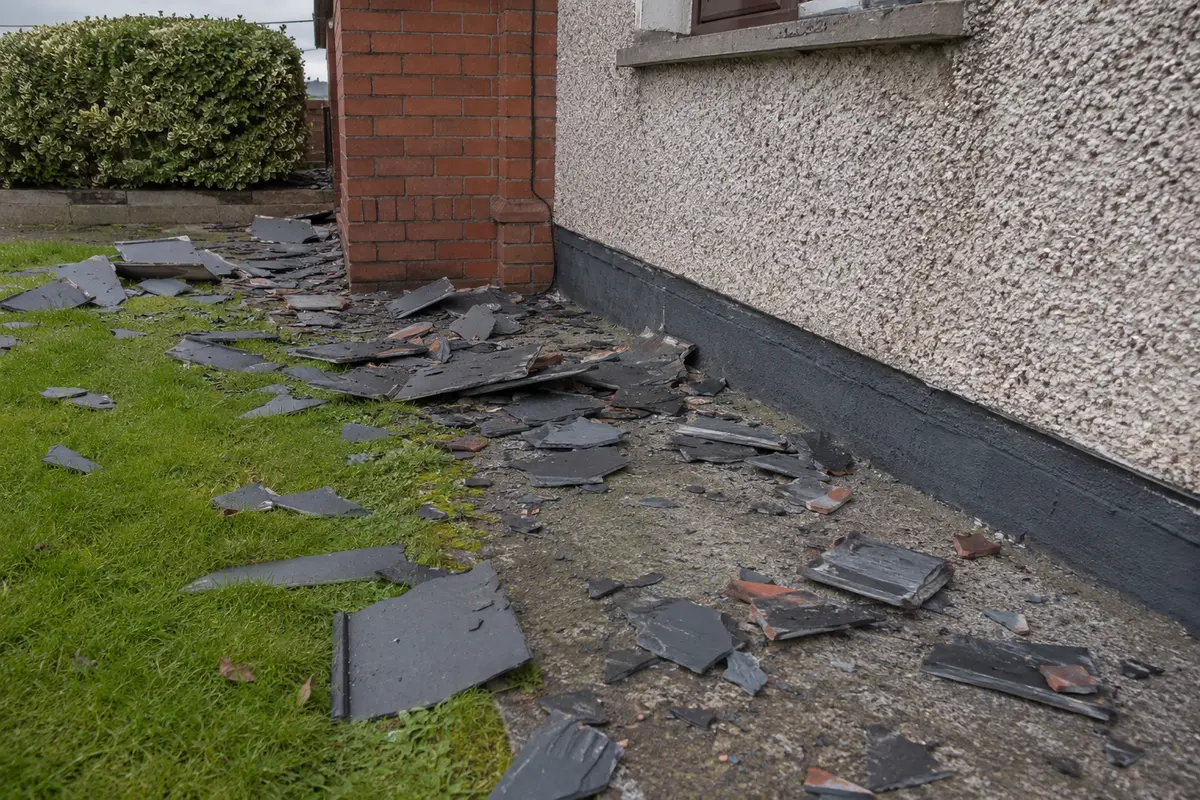
- Slipped or cracked slates and tiles. One slate out of place after a windy night leaves the felt below exposed, and driving rain finds the gap. This is why leaks so often appear during or just after a storm.
- Blocked valleys and gutters. When the valley between two roof slopes or the gutter at the eaves chokes with leaves and moss, water backs up under the covering instead of running away, and pushes in at the edges.
- Tired or split flat roofs. A felt or membrane flat roof over a rear return or extension sheds water poorly once it splits or blisters, and it shows up as a stain on the ceiling directly below.
- Perished felt and worn coverings. On an older roof the underlay and the slates simply reach the end of their life, and the covering starts letting water through in more than one place at once.
Condensation Versus a Real Roof Leak
Not every damp patch is a leak. Condensation in a poorly ventilated attic can leave the timbers and the underside of the felt wet, and drip onto the ceiling below in a way that looks exactly like a leak. The tell-tale signs of condensation are damp that is worse in cold, still weather rather than in rain, a general dampness across the attic rather than one clear track, and water beads on the underside of the felt or on cold pipes. A true leak follows the rain, shows a defined path down a rafter, and gets worse in wind and heavy downpours. If you are not sure which you have, that is exactly the sort of thing a free inspection settles quickly.
How To Find Where Your Roof Is Leaking
You can gather most of what a roofer needs to know without ever leaving the ground or the attic. The aim is not to fix anything, just to narrow down where the water is getting in so the repair goes straight to the cause.
Look From Inside the Attic First
In daylight, a torch in the attic is the best tool you have. Trace the wet track back up the rafters and the felt toward its highest point, because water always runs downhill, so the entry point sits above the wettest timber. Look for daylight coming through the covering, dark water staining on the timbers, and damp around the chimney, around any vent pipe, and along the valleys. Mark the spot in your memory or with a photo. Do this only if your attic is safely boarded and reachable, never by balancing on joists.
Then Look From the Ground Outside
From the garden or the street, and with binoculars if you have them, scan the roof for the obvious faults: a slate out of line or missing, a ridge tile sitting proud, lead flashing that has lifted at the chimney, moss packed into a valley, or a gutter visibly sagging or overflowing. Check the flat roofs over any extension from an upstairs window. Match what you see outside to where the water showed up inside, and you often have the answer before a roofer arrives.
Photos of the attic track, the ceiling stain and anything you can see on the roof from the ground tell a roofer more than any description. Send them over when you call, and the visit is far more likely to fix the problem first time.
What Not To Do When Your Roof Is Leaking
Some instincts make a leak worse or put you in real danger. A roof leak is rarely worth a trip to hospital, and the wrong quick fix can turn a small repair into a large one.
- Do not go up on the roof in bad weather. A wet, mossy or windy roof is where serious falls happen. This is the clearest line to draw: leave the roof itself to someone with proper access and footing.
- Do not send anyone up a ladder in a storm. The temptation to lash something over the leak while the rain is at its worst is exactly when it is least safe. Wait for the weather to ease, or call for emergency help.
- Do not slap sealant or tar over everything. Smearing mastic across slates and flashing traps water underneath, hides the real fault, and makes a proper repair harder and dearer later.
- Do not ignore a small stain. A brown ring that dries out and comes back is a leak that is still active. Left alone through a Dublin winter, it rots timber and spreads across the ceiling.
- Do not touch wet electrics. If water is near any fitting or socket, isolate that circuit at the fuse board and keep away until it is dry and checked.
When a Roof Leak Is an Emergency
Most leaks can wait a day or two for a booked visit without any harm done. Some cannot. It counts as an emergency, and is worth a 24/7 emergency call rather than a routine appointment, when any of the following is true.
- Water is coming in fast and you cannot contain it with buckets and towels.
- A ceiling is bulging, cracking or already coming down under the weight of trapped water.
- Water is running into light fittings, sockets or the fuse board.
- A storm has torn slates or a whole section of covering off and the roof is open to the weather.
- The leak is over a bedroom, a nursery or the only bathroom, and the room cannot be used safely.
In those cases the priority is to make the roof safe and watertight quickly, then carry out the full repair once the weather clears and the roof can be worked on properly. The Roofing Academy runs a 24/7 emergency service across Dublin for exactly this. If you are unsure whether your leak crosses the line, it is always worth a phone call, and a straight answer costs nothing.
Temporary Measures To Hold a Roof Leak Until a Roofer Arrives
The safest holding measures are all done from inside, and they buy you time rather than fix the roof. Keep the buckets and towels in place, empty them before they overflow, and keep the attic hatch open so warm air can help the timbers dry between showers. If a bulge has formed in a ceiling, drain it as described earlier rather than waiting for it to give way on its own.
Anything that involves going onto the roof, a tarpaulin over a stripped area, a temporary cover pinned over lifted slates, is a job for a roofer with the right access and safety kit, not a homeowner up a ladder in poor weather. In a genuine storm emergency, that temporary weatherproofing is part of what an emergency call-out is for. Trying it yourself on a wet roof is where a manageable problem becomes a dangerous one.
If you think the leak may be a home-insurance claim, photograph everything and keep receipts for any emergency work. A clear record of the damage and what was done to limit it makes any claim far smoother.
What a Permanent Roof Leak Repair Involves, and What It Costs
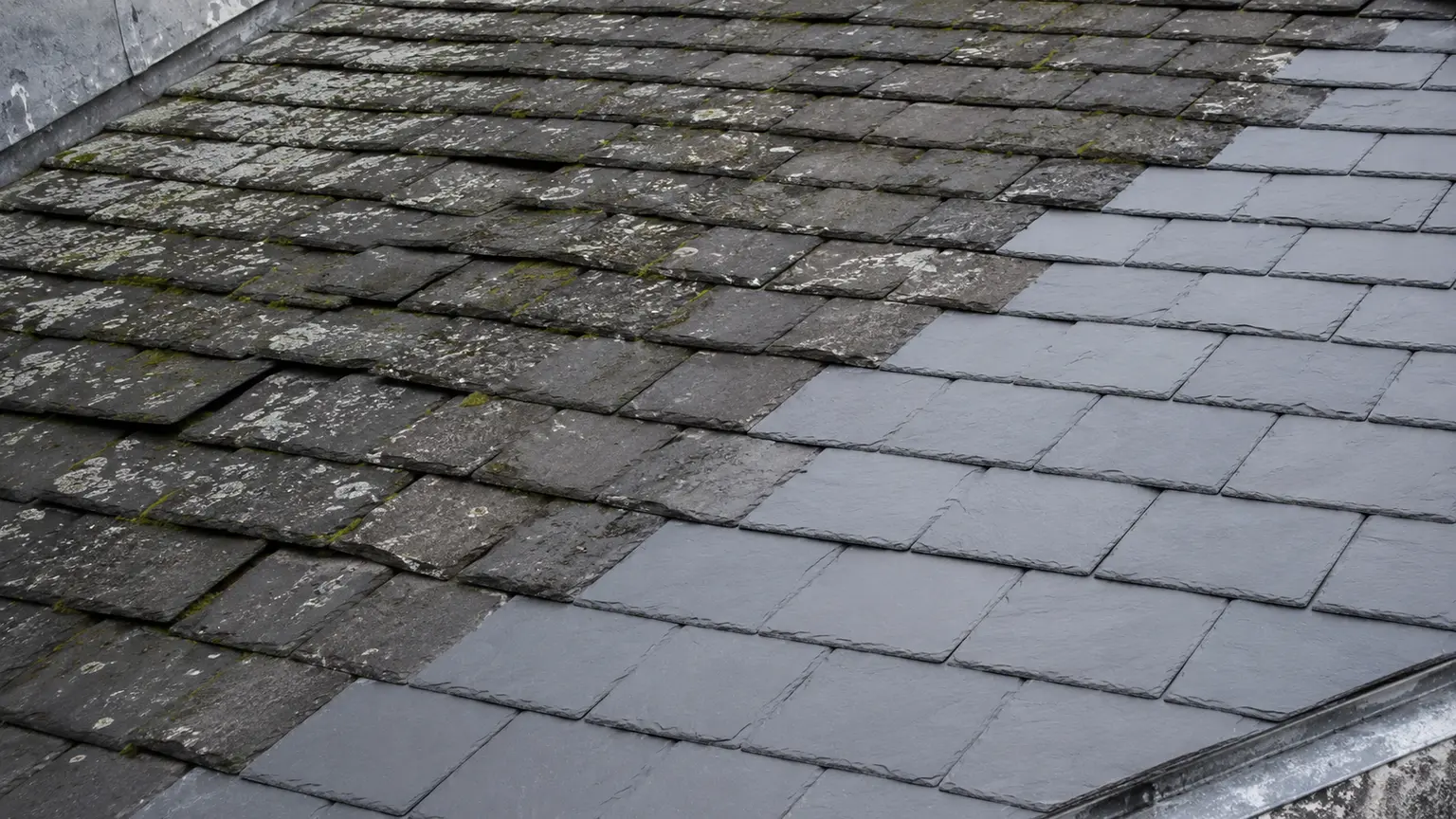
A lasting fix starts by finding the true source rather than the wet patch, and that is where experience earns its keep. A roofer will get up safely, trace the water back to its entry point, and put right the actual fault, whether that is re-dressing failed flashing, replacing slipped or cracked slates to match the existing roof, clearing and re-forming a blocked valley, or patching or re-covering a tired flat roof. Done properly, the repair is matched to your roof so it disappears into the covering rather than standing out as a patch.

What Affects a Roof Leak Repair Cost
Homeowners understandably want a figure, but an honest one depends on the job in front of us, so the fair thing is to explain the factors rather than quote a number that turns out wrong. What a roof leak repair costs comes down to a few things:
- The cause and its extent, from replacing a few slates to re-dressing a full valley or a run of failed flashing.
- Access, since a repair you can reach from a ladder is a smaller job than one that needs a scaffold or tower for safe working.
- The materials to match, as natural slate, clay tile and lead take more care and cost more than a plain modern covering.
- The type and pitch of the roof, because a steep period roof or an awkward rear return takes longer to work on safely.
Every repair we carry out starts with a free inspection and a clear written quote, so you know the price before any work begins, and our repairs are backed by our 20-year guarantee. You can read more about the full service on our roof repairs page, and if you are weighing up whether a repair will hold or the roof is genuinely past it, our guide on whether you need a new roof walks through the honest signs.
The short version of what to do about a roof leaking into your home is simple. Contain the water and stay safe indoors, gather what you can see from the ground and the attic, and let a family-run Dublin roofer trace it to the source and put it right for good. Caught early, most leaks are a tidy repair rather than a big job, and getting it sorted now is what keeps a small stain from becoming a rotten roof.