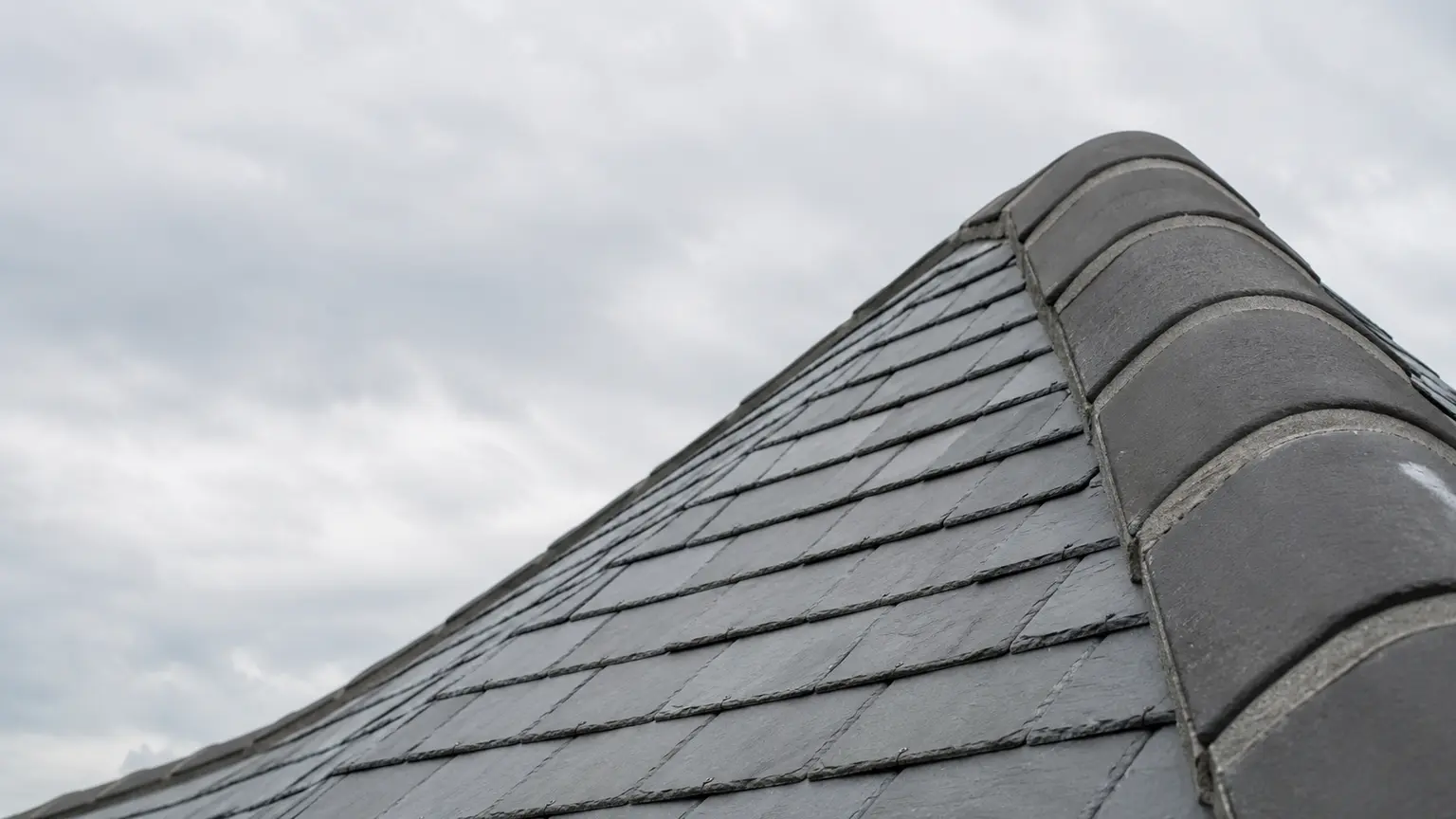
Last updated: July 2026
Moss on roof tiles is one of the most common things Dublin homeowners ask us about, and the honest answer surprises people: most of the time it's cosmetic, not catastrophic. A green cushion of moss on a north-facing slope looks worse than it usually is. That said, moss is not always harmless, and knowing the difference between a roof that just looks tired and one that's quietly holding water is what really matters.
Why Moss Grows on Roof Tiles in the Irish Climate
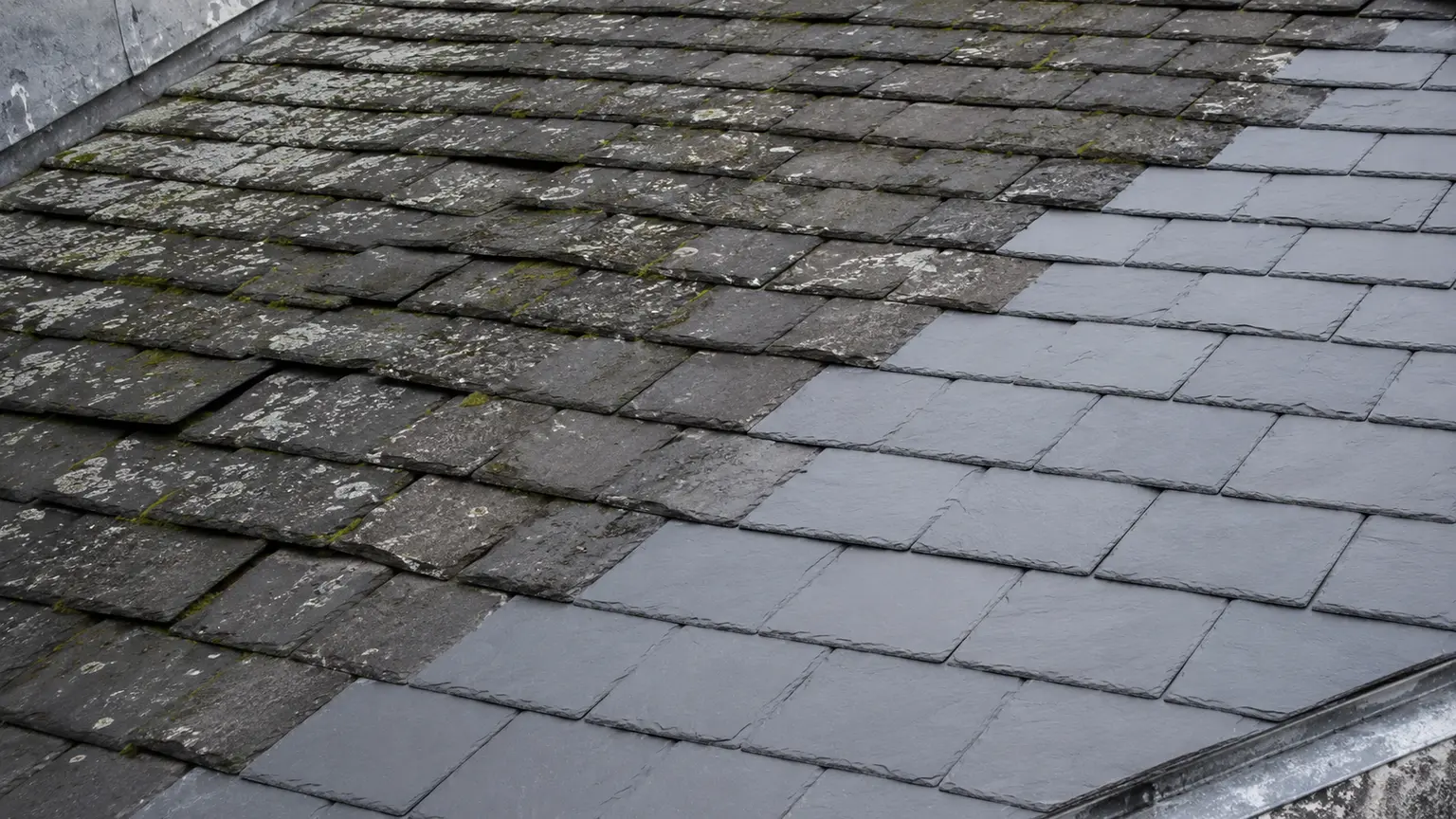
Moss on roof tiles thrives in exactly the conditions Ireland serves up all year round. It needs three things to settle: damp, shade, and a surface with enough texture to grip. A Dublin roof offers all three for most of the calendar, which is why moss is so much more common here than in a hot, dry climate.
Rain keeps the tiles damp for long stretches, and our mild winters mean the surface rarely dries out fully or bakes clean in strong sun. Spores drift in on the wind, land on a slope that stays wet, and take hold in the tiny pits and grooves of the tile. Once a thin film of algae is down, moss follows, and from the ground it reads as that familiar green or rusty-brown carpet.
North-facing and shaded slopes get it worst
- North-facing slopes see the least direct sun, so they stay damp longest and grow the heaviest moss.
- Roofs shaded by trees, a neighbouring gable, or a tall boundary wall dry slowly and collect leaf debris that feeds growth.
- Older concrete tiles are more porous than newer ones, so they hold moisture and give moss more to cling to.
- The lower courses near the gutter and the sheltered sides of valleys stay wettest and green up first.
None of this means your roof is failing. It means your roof lives in Dublin. A period terrace in Rathmines, a semi in Clontarf, or a bungalow out towards Swords will all grow moss on the shaded pitch given a few damp years, and that on its own is a maintenance question, not an alarm.
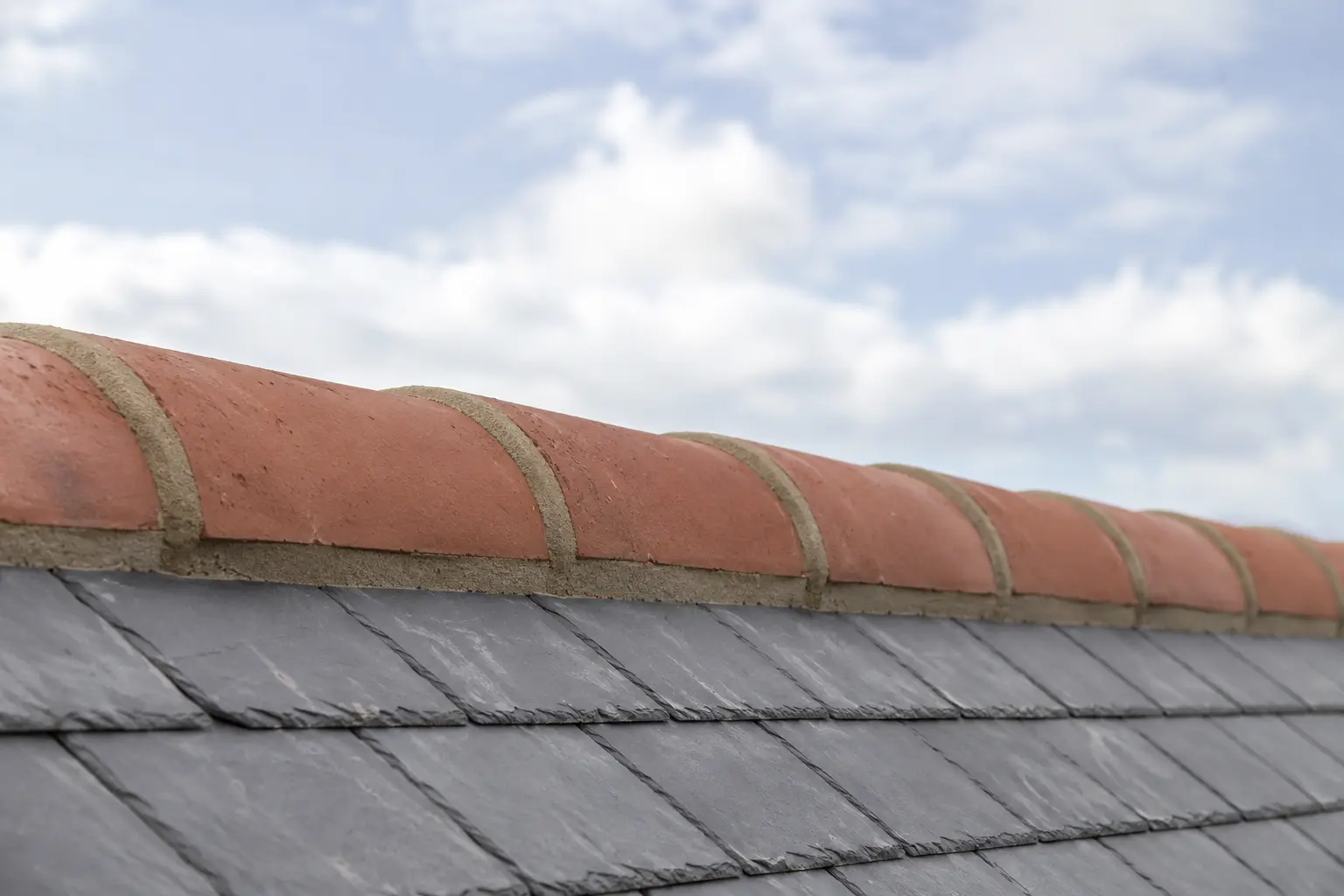
Is Moss on Roof Tiles Actually a Problem?
Is moss on roof tiles a problem? For a lot of homes, honestly, no. A light covering of moss on a sound, well-laid roof is doing very little beyond making the house look a bit unloved from the kerb. The tiles underneath it are still shedding water, the flashings are still doing their job, and the roof is still watertight.
We would rather tell you that plainly than talk you into a clean you don't need. Plenty of well-meaning cleaning outfits present any green at all as an emergency, and it simply isn't. If the moss is thin, patchy, and confined to one shaded slope, and your gutters run clear and your ceilings are dry, then you're most likely looking at a cosmetic issue you can leave or tidy at your leisure.
Thin, patchy moss on a watertight roof is cosmetic. It becomes a real problem when it grows thick enough to hold water against the tiles, or when it breaks loose and blocks your gutters and valleys. The question is never just "is there moss?" It's "is the moss doing anything?"
So the useful thing isn't to panic at the sight of green. It's to know the handful of situations where moss stops being a look and starts being a leak risk, which is worth knowing before you decide.
When Moss on Roof Tiles Becomes a Real Problem
Moss on roof tiles turns from cosmetic to costly in a few specific ways, and each one is worth knowing so you can spot it early. The common thread is water. Anything that lets moss trap and hold moisture where it shouldn't be, or that sends clumps of moss into your drainage, is where the trouble starts.
Blocked gutters, valleys and downpipes
This is the single most common way moss causes real damage. As it grows and dies back, clumps break off and wash down the slope into the gutters, valleys, and downpipe heads. Once those block, rainwater backs up, spills over the fascia, and starts soaking the roof edge, the soffit, and eventually the wall. A blocked valley is worse again, because water that can't run away sits against the tiles and finds any weak lap or joint.
Moisture held against the tiles
A thick, spongy moss layer acts like a wet blanket. Instead of the tile surface drying between showers, it stays damp for days. On its own that shortens the life of an older concrete tile, and it keeps the whole roof structure wetter than it wants to be. It won't put a hole in a good tile overnight, but it accelerates the ageing of one already near the end of its life.
Freeze-thaw lifting and cracking
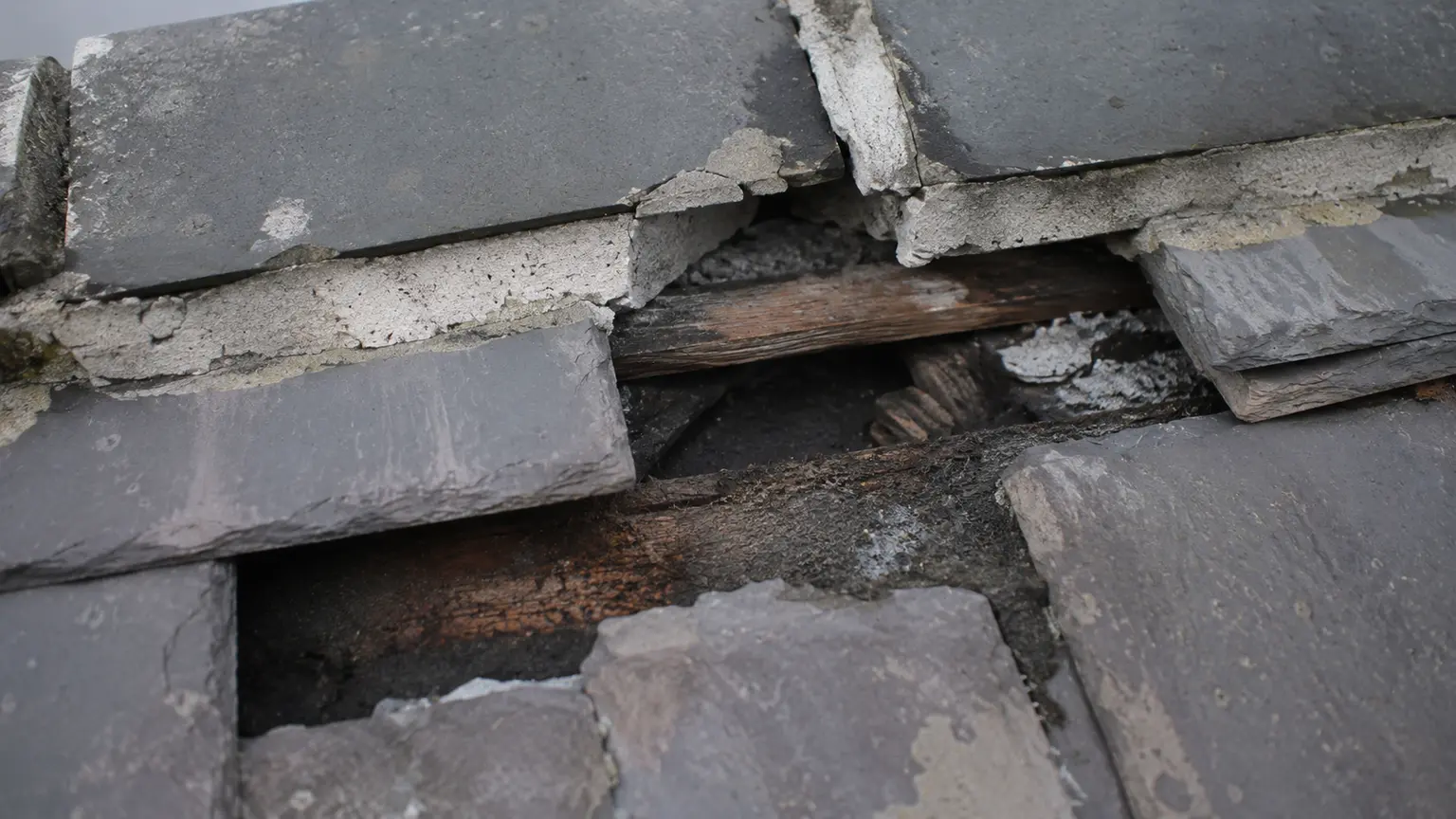
This is the one that does genuine structural harm. Moss holds water in the joints and laps between tiles. When a cold Dublin snap freezes that trapped water, it expands, and it can nudge tiles out of position or open up a hairline crack in an already porous tile. Repeated freeze-thaw cycles over a few winters work loose exactly the tiles that are meant to keep water out. That's when moss stops being a look and becomes the reason water is getting in.
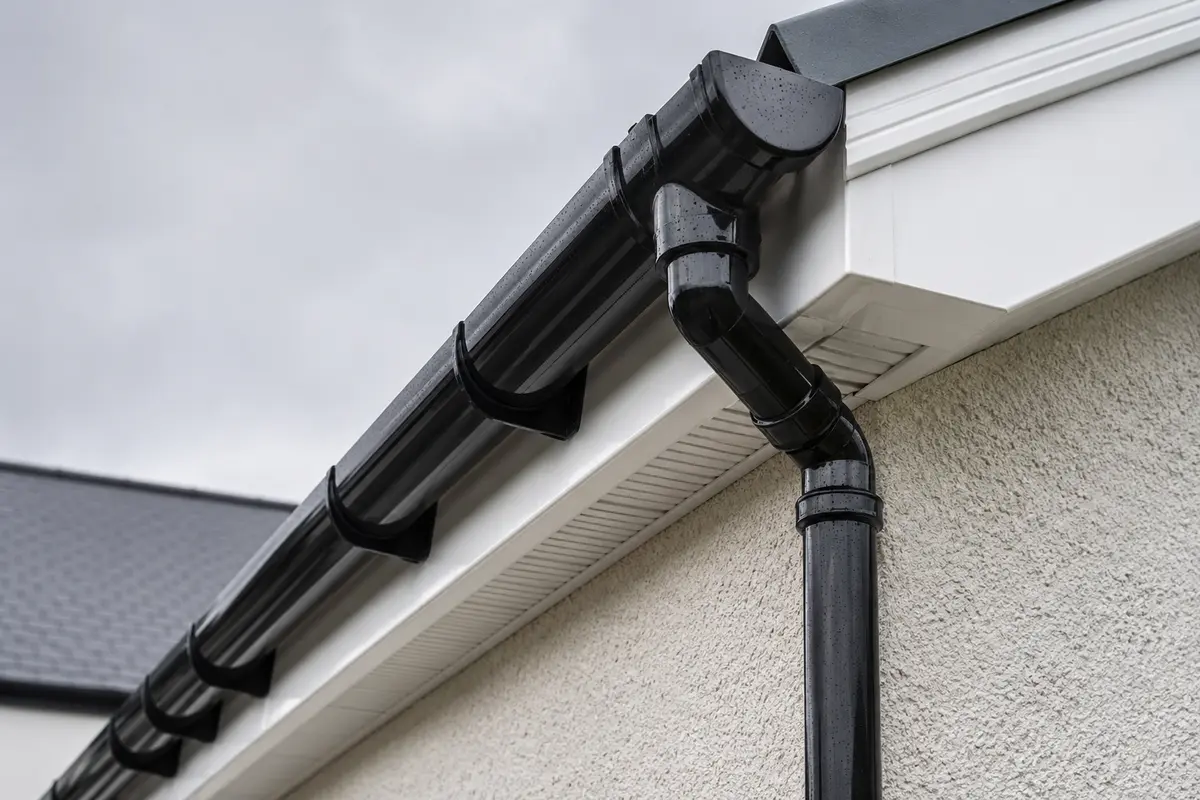
Water marks on an upstairs ceiling, damp patches on the wall below a valley, gutters overflowing in heavy rain, moss visibly packed into the joints between tiles, or slipped and lifted tiles on the mossy slope. Any of these means it's worth getting the roof looked at rather than just cleaned.
If you're already seeing a stain spreading on a ceiling, that's a different conversation to a bit of green on the tiles. Our guide on what to do about a leaking roof walks through the first steps when water is actually getting in.
How to Remove Moss From Roof Tiles Safely
How to remove moss from roof tiles safely comes down to one principle: be gentle with the tile and careful with yourself. The moss is easy to shift. The damage comes from the method, not the moss, and the wrong method can turn a cosmetic job into a repair bill.
Why pressure-washing roof tiles does more harm than good
A pressure washer feels like the obvious tool, and it's usually the wrong one. The force strips the protective surface layer off concrete tiles, leaving them more porous and quicker to grow moss back than before you started. It drives water up under the laps and into the roof space where it has no business being. It can crack ageing tiles outright and blast the bedding out from under ridge and hip tiles. On many roofs, aggressive jet-washing also undermines the very thing a roofer would stand over, so it's a poor trade even before you count the damage.
- Clear the loose growth by hand. Moss is lifted, not blasted. A soft brush or a plastic scraper worked gently down the slope, in the direction the tiles overlap, takes off the bulk without lifting or cracking anything.
- Never brush upwards. Working up the slope forces the bristles under the tile laps and can prise tiles loose. Always brush down, the way the water runs, so the tiles stay seated.
- Clear the gutters and valleys as you go. Everything you loosen ends up in the drainage. Clearing the gutters, valleys, and downpipe heads is half the job, and skipping it just moves the blockage.
- Let a treatment do the slow work. A suitable roof-safe biocide, applied and left, kills off the remaining spores over the following weeks so growth is slower to return. It's gentler than any physical scrubbing and doesn't touch the tile surface.
Why walking a roof yourself is the real risk
The honest hazard in the whole job isn't the moss, it's the height. Roof tiles are slippery at the best of times, and a mossy, damp slope is genuinely dangerous underfoot. Tiles are also not designed to be walked on directly, so a homeowner picking their way across the roof risks both a fall and a trail of cracked tiles behind them. If the moss is anywhere you can't reach safely from a ladder or an access platform, that's the point to bring in someone set up to work at height with proper scaffolding and edge protection.
What a professional moss clean costs depends on the size and pitch of the roof, how you can access it, how heavy the growth is, and whether any tiles or bedding need attention while the roofer is up there. We give a free quote after a proper look, so you know what you're paying for before anything starts. As a fully insured, family-run Dublin firm, our work carries a 20-year guarantee.
Should You Fit Anti-Moss Measures on Roof Tiles?
Anti-moss measures on roof tiles can slow regrowth, but it's worth being realistic about what they do and don't achieve. Nothing keeps a shaded Dublin roof green-free forever, and any product or fitting that promises that is overselling. What the sensible options do is lengthen the gap between cleans.
- Copper or zinc strips fitted along the ridge release a trace of metal salts when it rains, which washes down the slope and discourages moss and algae below. They work best as a preventative on a roof that's already clean.
- A roof-safe biocide treatment after a clean kills residual spores and buys you a longer clean interval than doing nothing.
- Keeping overhanging branches cut back lets more light and air onto the slope, which is the cheapest anti-moss measure there is.
- Regular gutter clearing stops the damp, debris-filled edge that moss loves to spread from.
For a lot of homeowners the most honest advice is to skip the gadgets and simply have the roof checked and cleared when it needs it, rather than paying for a permanent fix that doesn't exist. If your roof is heavily shaded and moss comes back fast, a ridge strip can be worth it. On a slope that only greens up lightly, keeping the gutters clear and the trees trimmed usually does the job for free.
When to Get Your Roof Tiles Checked by a Roofer
Sometimes the right move with moss on roof tiles isn't a clean at all, it's an inspection. Moss can hide what's underneath it, and a heavily mossed slope occasionally masks slipped, cracked, or porous tiles that are the actual reason a roof is letting water in. Clearing the green off a failing tile only reveals the fault, it doesn't fix it.
Book a check rather than a clean if you see any of these
- A damp patch or water stain on an upstairs ceiling or a chimney breast.
- Tiles that look slipped, lifted, or missing on the mossy slope.
- Gutters overflowing in ordinary rain, not just a downpour.
- Moss packed thickly into the joints rather than sitting loosely on the surface.
- A roof that's more than a few decades old and has never been properly looked over.
A proper roof inspection tells you whether you're dealing with a cosmetic tidy-up or an underlying repair, before you spend money on the wrong one. We've been doing exactly this across Dublin as a family-run firm since 1989, over 35 years of telling homeowners the truth about their roofs, and we hold a 5.0 rating from 41 Google reviews for doing it straight. If water is already coming in, we run a 24/7 emergency service for the jobs that can't wait.
Moss on roof tiles, then, is rarely the disaster it looks from the footpath, and it's occasionally more serious than it appears. A thin green film on a sound roof can be left or tidied whenever it suits you. Thick moss holding water against the tiles, blocking your gutters, or hiding damage underneath is the version worth acting on. When you're not sure which one you've got, a free inspection settles it, and you only pay for the work that genuinely needs doing.