Last updated: July 2026
Working out the real new roof cost in Ireland is harder than most online figures make it look, because no two roofs are the same and no honest tradesperson can price yours without seeing it. Instead, what follows walks you through everything that moves the number up or down, so when a quote lands on your table you understand what you are actually paying for and can compare like with like.
What Affects Your New Roof Cost in Ireland
New roof cost in Ireland is not a single sticker price, it is the sum of many separate decisions and site conditions that add up differently on every house. Two homes on the same Dublin street can carry very different roofing bills, because one has a simple two-sided roof reached easily from the garden while the next has multiple valleys, a chimney breast, dormer windows and a narrow side passage that scaffolding has to squeeze into. Before you can judge whether a quote is fair, it helps to know the handful of things that genuinely move the figure.
As a general guide, a full re-roof on an average Irish semi-detached home often falls somewhere in the broad region of the low thousands to the high thousands of euro, and larger or more complex roofs can run well beyond that. Treat that only as a rough market estimate, not a quote from us and not a figure to hold anyone to. The only way to know your real number is a free quote where someone actually inspects the roof.
- The size of the roof, measured in square metres of actual roof surface, not the footprint of the house.
- The pitch, or how steep it is, since steeper roofs are slower and harder to work on safely.
- The covering you choose, whether natural slate, fibre-cement slate, or concrete or clay tile.
- Access and scaffolding, which depend on the site, the height, and how easily a crew can reach the roof.
- Stripping and disposing of the old roof, including skips and safe removal of any old materials.
- Any timber or structural repairs found once the old covering comes off.
- Flashings, ventilation, ridge and any chimney work the roof needs to be sound.
How Roof Size and Pitch Shape the Price
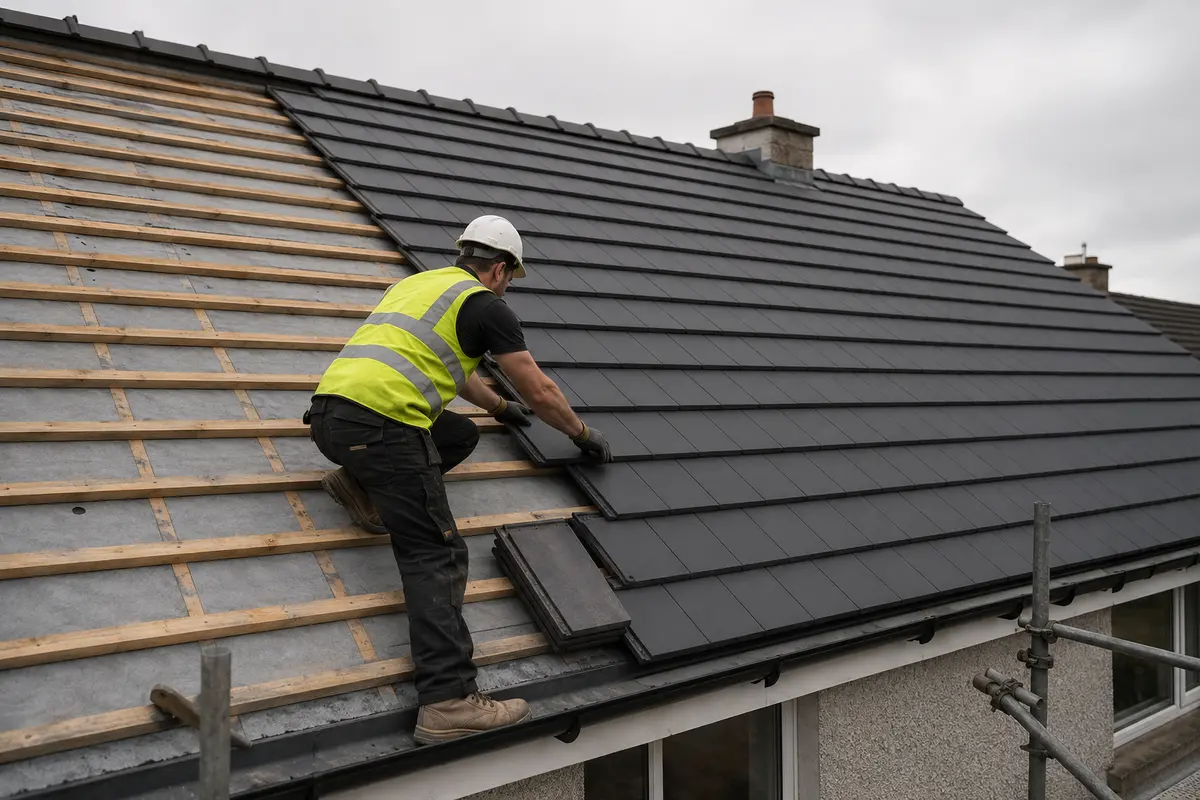
Roof size and pitch are usually the two biggest single factors in any new roof cost, because between them they set how much material is needed and how long the job takes. A bigger roof means more slates or tiles, more battens, more membrane and more labour hours, which is straightforward enough. Pitch is the part homeowners often underestimate.
A steep roof is slower and more demanding to work on than a shallow one. The crew moves more carefully, more edge protection is needed, and materials take longer to carry up and fix in place. A roof with lots of angles adds cost too, because every valley, hip and dormer is extra cutting, extra detailing and extra flashing. A plain rectangular roof with two clean slopes is the cheapest shape to cover, while a cut-up roof with several changes of direction asks for a lot more skilled time.
Why online roof cost calculators are only a rough start
A new roof cost calculator you find online can give you a ballpark to set expectations, and there is no harm in using one that way. What it cannot do is see your roof. It does not know the true pitch, whether the timbers underneath are sound, how tight the access is, or whether your ridge and flashings need replacing. Those unknowns are exactly where real money is won or lost, so use any calculator as a first sketch and never as a figure to budget against. A free on-site inspection replaces guesswork with an actual assessment of your roof.
Slate, Tile and Felt: How the Covering Changes the Cost
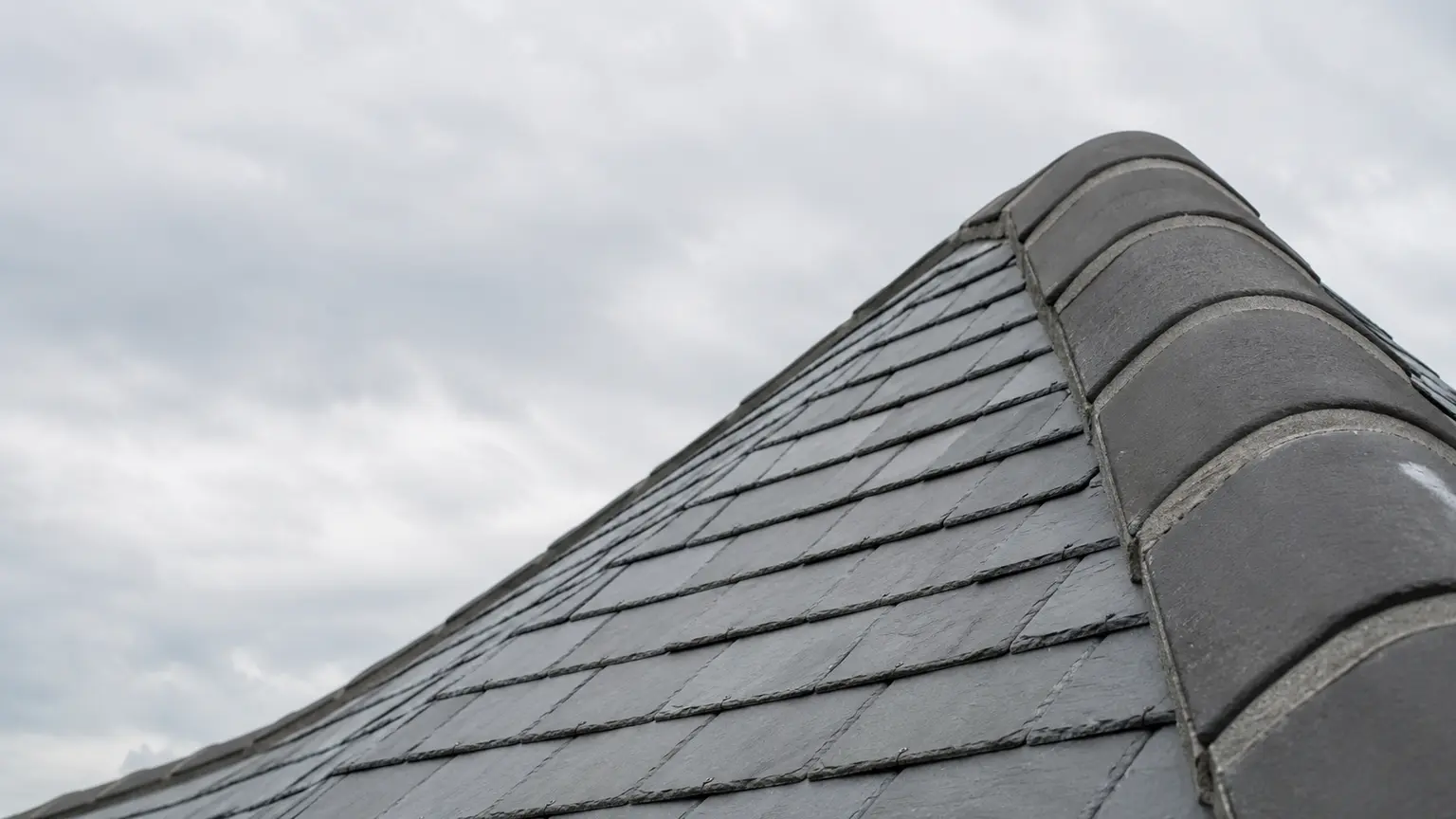
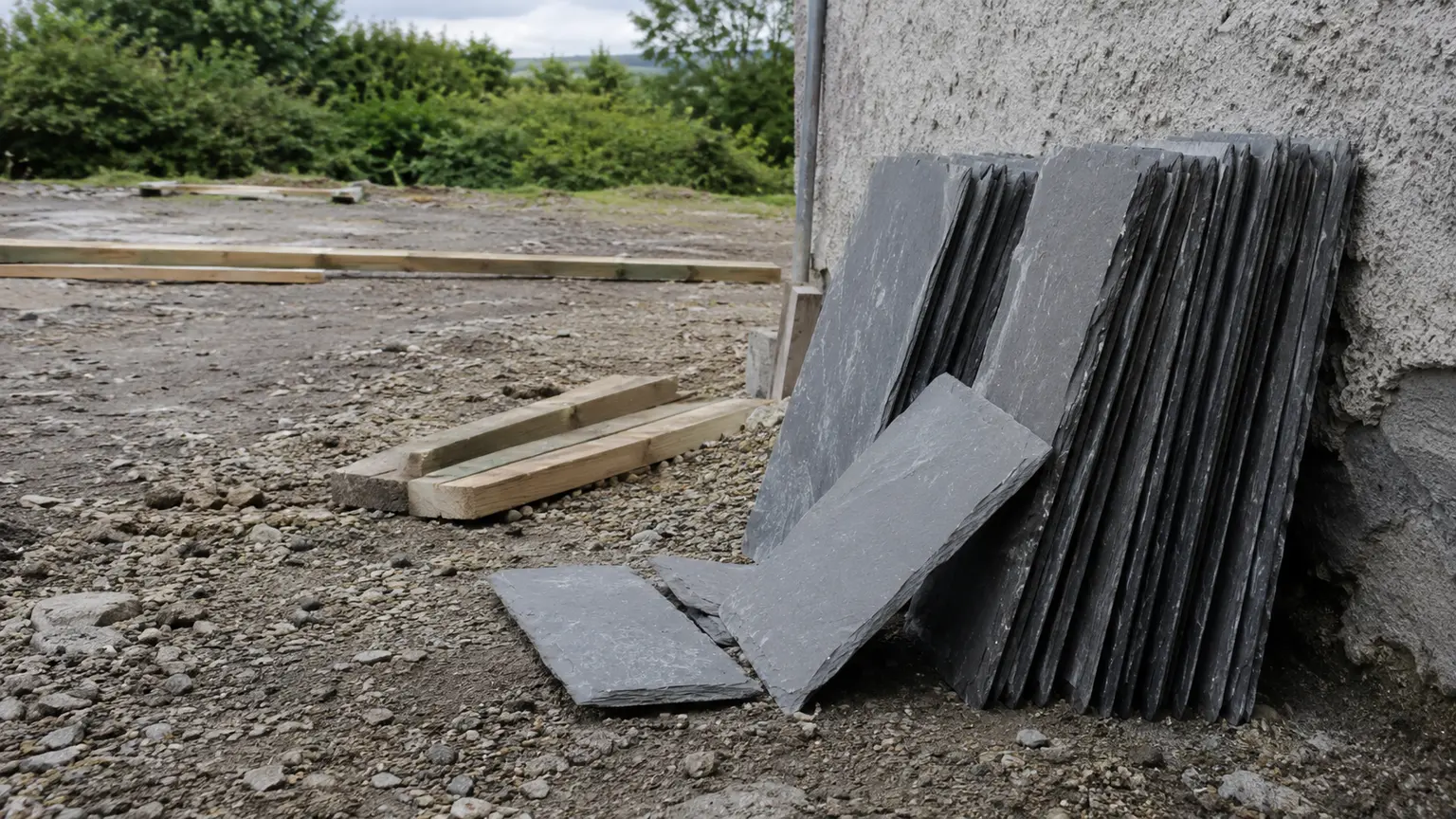
The covering you choose has one of the clearest effects on new roof cost, because materials sit at very different price points and carry different labour. Natural slate is a beautiful, long-lasting finish that suits period Dublin housing, and it usually sits at the higher end because the material itself costs more and each slate is fixed by hand. Fibre-cement slate gives a similar clean look for less outlay. Concrete and clay tiles are common on newer estates and often work out more affordable than natural slate, though a good clay tile is far from cheap.
Felt is a different conversation. On a pitched house roof, felt refers to the underlay membrane beneath the slates or tiles rather than the visible finish, and it is renewed as part of any full re-roof. On a flat roof, such as a garage, extension or shed, a felt or membrane system is the covering itself and is priced on its own terms. If your project mixes a pitched main roof with a flat section, expect the quote to treat them separately, because they use different materials and different labour.
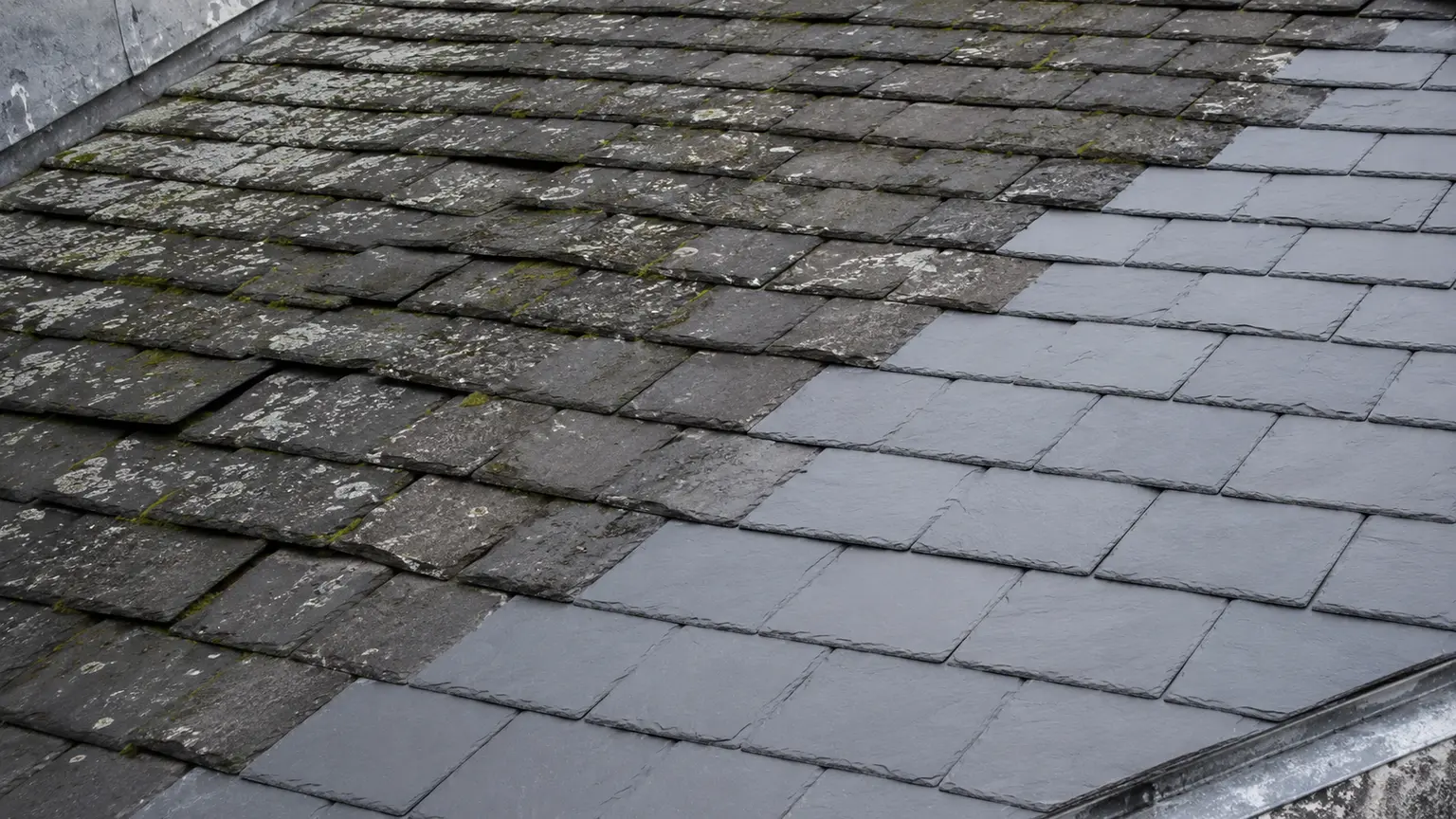
A lower material price can be a false economy if it means a shorter lifespan or a finish that looks wrong on your house. It is worth weighing the up-front figure against how long the roof should last and how it suits the property, then asking for that reasoning to be spelled out in your quote.
Scaffolding, Access and Stripping the Old Roof
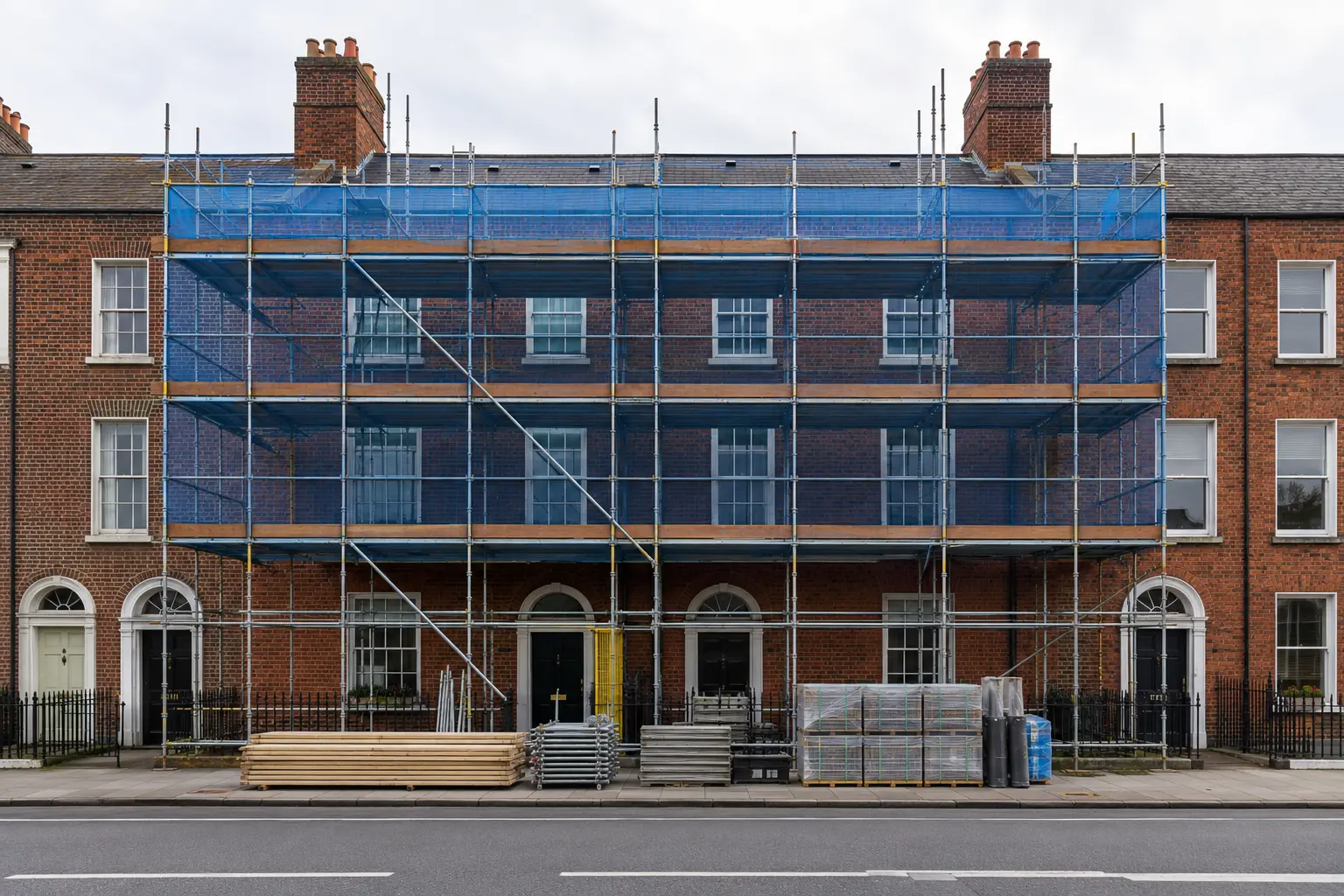
Scaffolding and access are real costs that some homeowners forget when they picture a new roof cost, yet they can be a meaningful slice of the total. Safe working at height is not optional, so a proper scaffold is erected, hired for the duration and taken down again, and that all carries a price. A tall three-storey house, a terrace with no rear access, or a site where the scaffold has to reach over a conservatory will all cost more to set up than a simple two-storey semi with a clear garden.
Stripping and disposing of the old roof is another line that has to be paid for whether or not anyone mentions it up front. Removing old slates or tiles, clearing the battens and membrane, and getting it all safely into skips takes time and generates waste that has to be disposed of correctly. On older Dublin homes there can be heavy materials to remove carefully, which adds to the labour. A quote that quietly leaves out strip-off and disposal is not really a full quote.
- Scaffold and set up. A safe working platform goes up around the roof, sized to the height and access of your property.
- Strip the old roof. The old covering, battens and membrane are removed and cleared into skips for correct disposal.
- Inspect and repair the timbers. With the roof open, the underlying timbers are checked and any rot or damage is dealt with before covering.
- Re-cover and finish. New membrane, battens, slates or tiles, flashings, ventilation and ridge go on, then the scaffold comes down.
Hidden Timber Repairs, Flashings and Chimney Work
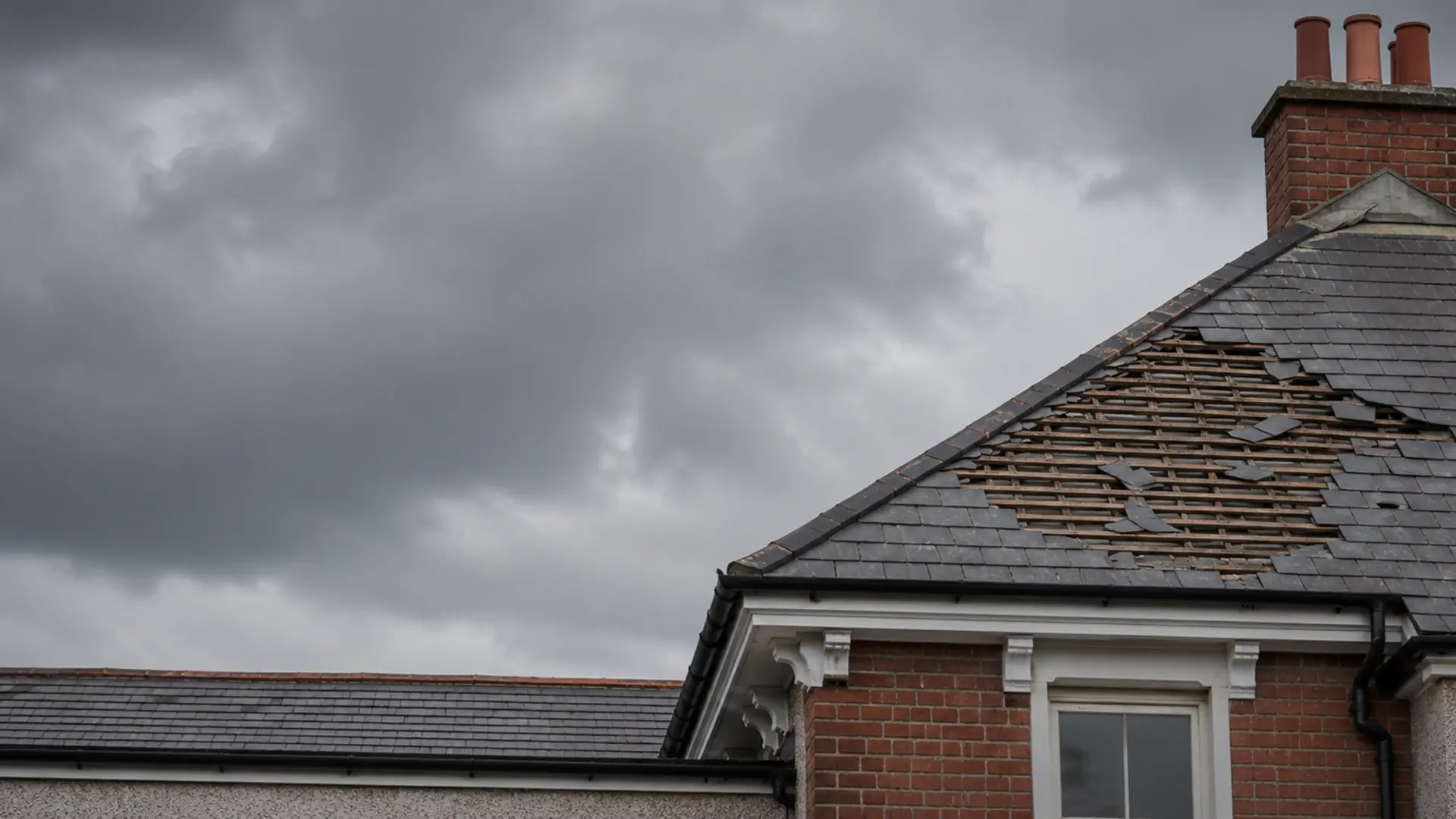
Some of the cost of a new roof only reveals itself once the old covering is off, which is why an honest quote flags this possibility rather than hiding it. Until the roof is stripped, nobody can be fully certain of the condition of the timbers underneath. Rafters, battens and the boards around the edges can be sound, or they can have hidden rot from years of a small leak, and any decayed timber has to be replaced for the new roof to be reliable. A good roofer will explain how they handle this, so there are no nasty surprises halfway through.
Flashings and ventilation matter more than their size suggests. Flashings are the metal, usually lead, that seals the joins where the roof meets a chimney, a wall or a valley, and worn flashings are a common source of leaks. A full re-roof is the right moment to renew them properly. Ventilation keeps the roof space healthy and dry, and modern standards expect it, so it forms part of a proper job rather than an optional extra.
Chimney work is often part of a re-roof
Where a house still has a chimney, the flashing and pointing around it are exactly the spots that fail first, so chimney work frequently rides along with a re-roof. Repointing the stack, renewing the lead around its base, or fitting new caps can all appear on a roofing quote. If your roof has a chimney, expect it to be assessed as part of the inspection and ask for chimney work to be itemised so you can see what is included.
Sometimes a targeted repair buys years before a full replacement is worth it. If you are weighing that up, our guide on whether you need a new roof walks through the signs to look for before you commit to the bigger spend.
How New Roof Quotes Are Structured
Understanding how a new roof quote is put together makes the final new roof cost far less mysterious and much easier to judge. A clear quote breaks the job into its parts rather than landing a single lump sum on the page with no explanation. When you can see the separate elements, you can tell what is included, what is assumed, and where any contingency sits for the unknowns behind the old covering.
- Scaffolding and safe access for the height and layout of your property.
- Stripping the existing roof and disposing of the old materials.
- The new covering, whether natural slate, fibre-cement slate, concrete or clay tile.
- Underlay membrane, battens and fixings.
- New flashings, ventilation and ridge.
- Any chimney work identified during the inspection.
- A clear note on how timber repairs found on strip-off will be priced.
A written, itemised quote is worth far more than a number quoted over the phone. It shows the roofer has actually looked at your roof, it protects you from surprises, and it gives you a document you can compare against others. If you can see the guide on new roofs and re-roofing for how a full job comes together, the individual lines on a quote start to make a lot more sense.
Comparing New Roof Quotes and What a 20-Year Guarantee Is Worth
Comparing new roof quotes fairly is the single best way to protect yourself, because the cheapest headline number is not automatically the best deal. The trick is to make sure every quote covers the same work before you compare the figures. If one price looks far lower than the others, the honest question is what has been left out. Missing scaffolding, no allowance for strip-off, a cheaper covering or no mention of flashings can all make a weak quote look attractive until the extras arrive later.
- Check each quote covers the same covering, the same scaffolding and the same strip-off, so you are comparing like with like.
- Look for a written, itemised breakdown rather than a single lump sum with no detail.
- Ask how each roofer handles timber repairs found once the roof is open.
- Confirm the contractor is fully insured, which protects you and your property.
- Weigh the guarantee behind the work, not just the price on the day.
A guarantee is where a slightly higher price often proves its worth. A 20-year guarantee means the people who fitted your roof stand behind it for the long haul, which is only reassuring if the firm giving it has the track record to back it up. A family-run Dublin roofing contractor working since 1989, over 35 years, with a 5.0 rating from 41 Google reviews, is a very different proposition from a one-off cheap quote with no history behind it. Set the up-front figure against decades of reliability and a real guarantee, and the best value is rarely the lowest number.